How to buy antiques on Portobello Road (and haggle politely)
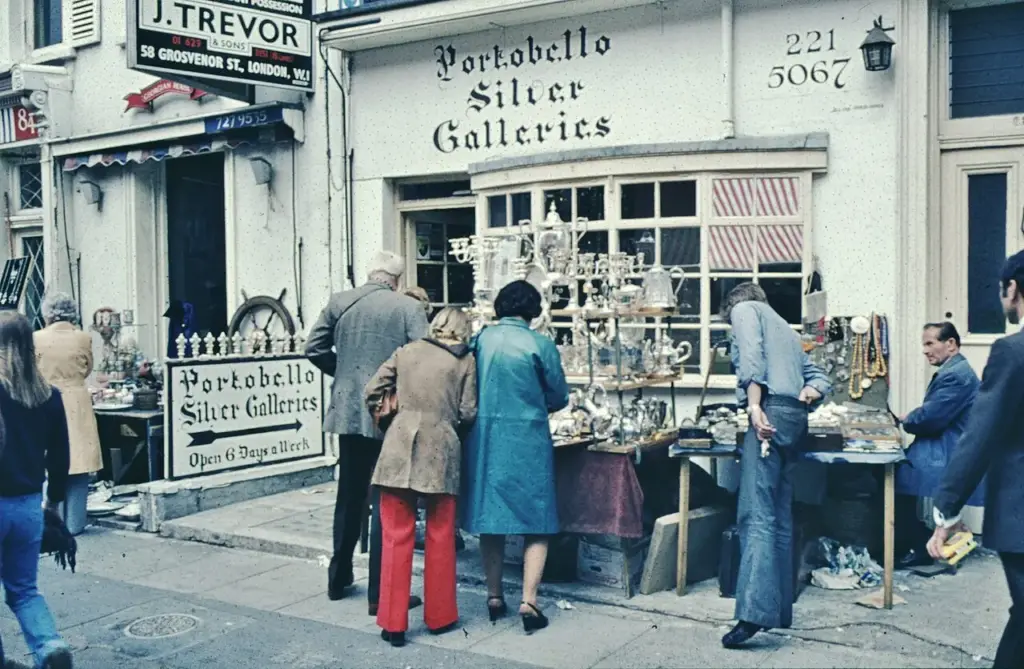
Go on a Saturday, start at the Notting Hill end, look before you ask, and check the hallmark before you pay. A practical guide to buying antiques on Portobello Road, from haggling to receipts.
Buying antiques on Portobello Road comes down to four habits: go on a Saturday morning, start at the Notting Hill Gate end, look properly before you ask a price, and check the hallmark on anything sold as silver or gold. Saturday is the only day the arcades open, and the dealers cluster at the southern end, around Chepstow Villas and Westbourne Grove. Haggle, but politely, and always leave with a receipt that says what you’ve bought.
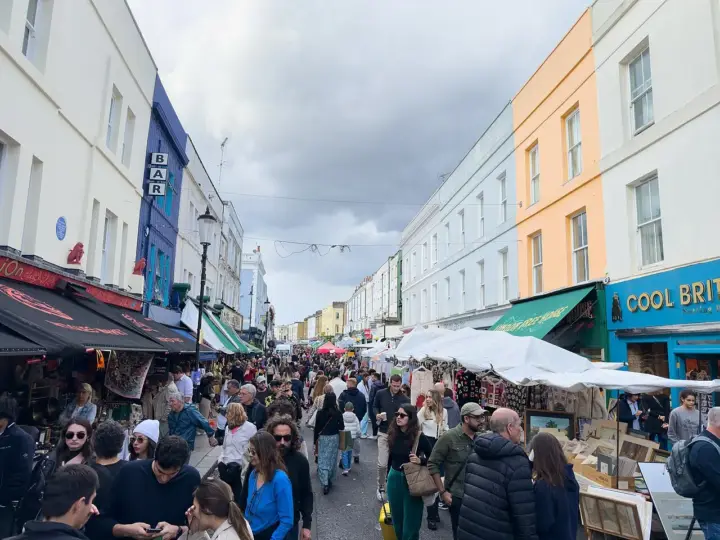
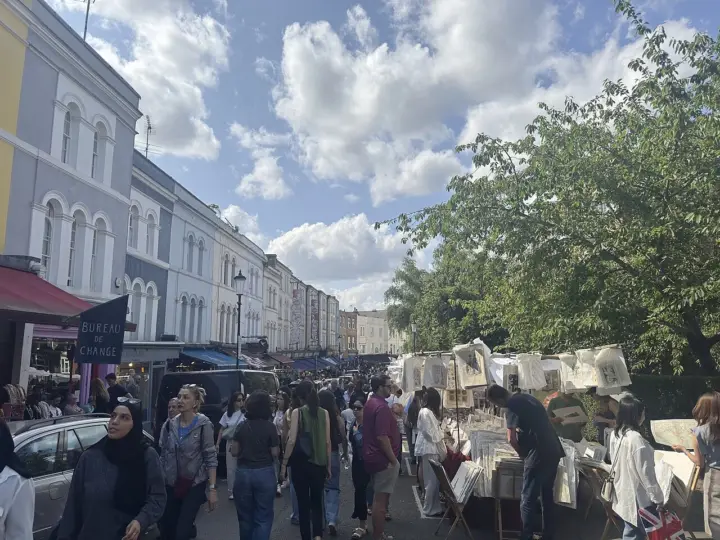
Portobello is, in the London Museum’s words, “one of the UK’s largest antiques markets”. It’s also busy, fast and full of dealers who know their stock far better than you do. Below we cover timing, where to look, how to negotiate and what the law says about precious metals. For the rest of the market, see our Portobello Road Market guide.
At a glance
- Best daySaturday; the arcades open only then
- Arcade hoursEarly morning to mid-afternoon; most open around 7am
- WhereChepstow Villas to Westbourne Grove, and Westbourne Grove itself on Saturdays
- HallmarksLook for three compulsory marks on silver and gold
- ToiletsStaffed council toilets at Westbourne Grove, from 7am on Saturdays
When to go
Saturday, and early. According to the official site, the arcades on the Chepstow Villas to Westbourne Grove stretch trade on Saturdays alone, most of them opening at around 7am and closing by about 4pm. That morning, extra antique stalls also run along Westbourne Grove as far as Kensington Park Road. Visit London tells Saturday visitors to come early, and for a buyer that advice matters twice over: in the first hour, stallholders can spare the time to talk and nothing good has been sold yet.
Fridays are a partial option. Some antique stalls trade, and the official site’s antiques page lists Friday hours, but the arcades stay shut. The sources disagree on antiques hours more than on anything else (our guide to Portobello Road opening times lists them all), so treat Saturday from early morning to mid-afternoon as the reliable window.
Tip: walk the whole antiques stretch once before you spend anything. Quality and pricing swing widely between stands, and you’ll often see the same kind of object three or four times.
Where the antiques dealers are on Portobello Road
The antiques section starts at the southern end of the road, near Chepstow Villas. Where it ends depends on who you ask. The official site puts the arcades south of Westbourne Grove. Local historians at the Ladbroke Association say the conversions after 1951 reached as far north as Elgin Crescent, and the London Museum draws the antiques section to the same point. In practice, the densest stretch is Chepstow Villas to Westbourne Grove.
Our map data shows how concentrated the trade is. OpenStreetMap tags 26 permanent premises around the market as antiques. Those are shops and arcades, not stalls, and nearly all of them sit at the southern end.
Places listed on OpenStreetMap in the antiques stretch include the Red Lion Arcade (165–169 Portobello Road), the Admiral Vernon Antique Market (141–149), Harris’s Arcade (161–163) and the Red Teapot Arcade (101–103). Specialist shops listed there include Atlam Pocket Watches (111), the Clock Centre (87), The Portobello Print & Map Shop (109) and Barham Antiques (83), which the Ladbroke Association says was founded in 1962. Listings change, so check before you go. Our antiques directory has the full list, and our guide to Portobello Road’s antiques arcades explains how each one works.
How to buy: step by step
- Set a budget before you arrive Decide what you’ll spend in total and on any single piece. It’s easy to get carried along on a crowded Saturday.
- Look first, then ask Handle things gently and ask before picking up anything fragile. Dealers are usually happy to tell you what something is, roughly when it was made and where it came from.
- Ask the right questions What is it made of? Has it been repaired or restored? Is anything replaced? Do you know where it came from? A good dealer answers plainly.
- Check the marks On silver, gold or platinum, look for a hallmark (more on that below). On ceramics, look at the base for factory marks and chips. On furniture, open the drawers and look at the joints.
- Make a reasonable offer Ask “what’s your best price?” or “could you do a little better?” rather than naming a low number. Then decide.
- Pay and get a receipt Ask for a written receipt that describes the item, its approximate age and what you paid, with the dealer’s name and contact details.
- Plan how to get it home Bring a bag and wrapping for small pieces. For anything large, ask the dealer whether they can arrange delivery or shipping before you commit.
How to haggle politely
Haggling is normal at antiques markets, and many dealers expect it. The skill is being friendly about it. A few habits help:
- Be interested first. Ask about the piece before you ask about the price. It signals you’re a serious buyer.
- Let them name a price. If nothing is marked, ask what they’re asking. Then ask whether there’s any flexibility.
- Don’t insult the stock. Pointing out a real flaw is fair. Running down the object to push the price is not.
- Bundle. If you like two or three things on one stand, ask for a price on all of them together.
- Mean it. Only make an offer you’d be happy to pay. Walking away after a dealer accepts your figure is the one real breach of etiquette.
- Walk away nicely. “Thanks, I’ll have a think” is fine. You can always come back.
How much room there is varies by dealer and by object. We don’t quote typical discounts because no reliable source gives one. For more on manners at London’s markets, see our guide to market etiquette: haggling, cash and photos.
Reading a hallmark
In the UK, hallmarking is a legal requirement, not a nicety. GOV.UK’s hallmarking guidance says “a complete hallmark consists of 3 compulsory marks”:
- The sponsor’s or maker’s mark: the registered mark of the person or company that sent the item for hallmarking, usually initials in a shield.
- The metal and fineness mark: the precious metal content in parts per thousand.
- The assay office mark: which UK assay office tested and marked it. London’s is the leopard’s head.
Many British pieces also carry a date letter. The Goldsmiths’ Company, which runs the London Assay Office, says the date letter has been voluntary since 1999, “and therefore will not always be present”. Before 1975 each assay office used its own cycle of letters, so a date letter must be read against that office’s published tables.
Small items don’t need a hallmark. GOV.UK gives these minimum weights:
| Metal | No hallmark needed below |
|---|---|
| Silver | 7.78 grams |
| Gold | 1 gram |
| Palladium | 1 gram |
| Platinum | 0.5 gram |
RBKC’s own guidance for traders adds two things worth knowing as a buyer. First, “by law the Dealer’s Notice needs to be shown at point of sale”. That’s the printed chart explaining the marks, so look for it on stalls selling silver and jewellery. Second, a description “should be clear and not imply that it is precious metal just because of its colour or plating”. If something looks silver but has no hallmark and weighs more than 7.78 grams, ask what it is.
Good to know: The Goldsmiths’ Company warns that silver-plated items can carry imitation stamps that look like hallmarks. Check that the marks match official UK hallmarks. Our guide to spotting reproductions goes further, and silver and jewellery on Portobello Road covers the specialist dealers.
Paying, receipts and getting it home
Bring a card and some cash. RBKC notes a general shift towards card and contactless payments at its markets, and many stalls take cards, but no official source confirms that every dealer does. Some smaller stalls may prefer cash. Ask before you settle on a deal.
Always ask for a receipt for anything of value. It’s your record of what the dealer told you, and it’s useful for insurance, for customs if you’re taking the piece abroad, and if you ever sell it. A good receipt names the object, describes its material and approximate date, notes any repairs the dealer mentioned, and gives the price and the dealer’s details.
For bulky pieces, ask the dealer about delivery before you pay. Cars are kept off the road for most of the trading day, Monday to Saturday (our explainer on the car-free market hours has the details), so you can’t pull up outside a stall at noon. Our guide to getting to Portobello Road Market covers the tube and bus options.
Go for
- Silver, prints, clocks and small collectables you can carry
- Talking to specialist dealers early on a Saturday
- Comparing several stands before you buy
Skip if
- You can only come on a weekday: the arcades are shut
- You want fixed prices and no conversation
- You arrive mid-afternoon expecting the full range
Want to compare Portobello with London’s other antiques days? Our guide to London’s best antiques markets covers Covent Garden’s Monday market, Spitalfields on Thursdays and Greenwich.
FAQs
What day is best for antiques on Portobello Road?
Saturday, the only day the arcades open. Most are trading from around 7am until mid-afternoon, so the morning is the time to buy.
Can you haggle on Portobello Road?
Yes, haggling is normal with antiques dealers. Be polite, ask for their best price rather than naming a very low figure, and only make offers you’d be happy to pay.
Do Portobello antiques dealers take cards?
Many do, but no official source confirms that every stall does. Carry some cash as well and ask before you agree a price.
How do I know silver is real?
Look for a UK hallmark: a sponsor’s mark, a fineness mark and an assay office mark. Silver items under 7.78 grams don’t legally need one, so ask the dealer about anything unmarked.
Should I get a receipt?
Yes. Ask for a written receipt describing the item, its approximate age, any repairs and the price, with the dealer’s details.
Sources
- Hallmarking is the law: guidance summary, GOV.UK (updated 30 December 2022), gov.uk
- Guidance for selling precious metal items to the public, RBKC (updated 3 September 2024), rbkc.gov.uk
- Where? (opening times and sections), Portobello Road Market official site, visitportobello.com
- Antiques & Collectables, Portobello Road Market official site, visitportobello.com
- Portobello Market: London's largest antiques market, London Museum, londonmuseum.org.uk
- Portobello Road, Ladbroke Association, ladbrokeassociation.org
- How to trace a hallmark, The Goldsmiths' Company, thegoldsmiths.co.uk
- Markets Plan 2022–27, Royal Borough of Kensington and Chelsea, rbkc.gov.uk
- Public toilets, RBKC (updated 29 May 2026), rbkc.gov.uk
- Notting Hill and Portobello Road Market, Visit London, visitlondon.com
- Portobello market goes car-free permanently, RBKC newsroom, 19 November 2021, rbkc.gov.uk
- Portobello Road Market places, OpenStreetMap contributors (ODbL), extracted November 2026, openstreetmap.org
Main photo: Karl Oppolzer, CC BY-SA 3.0, via Wikimedia Commons.